
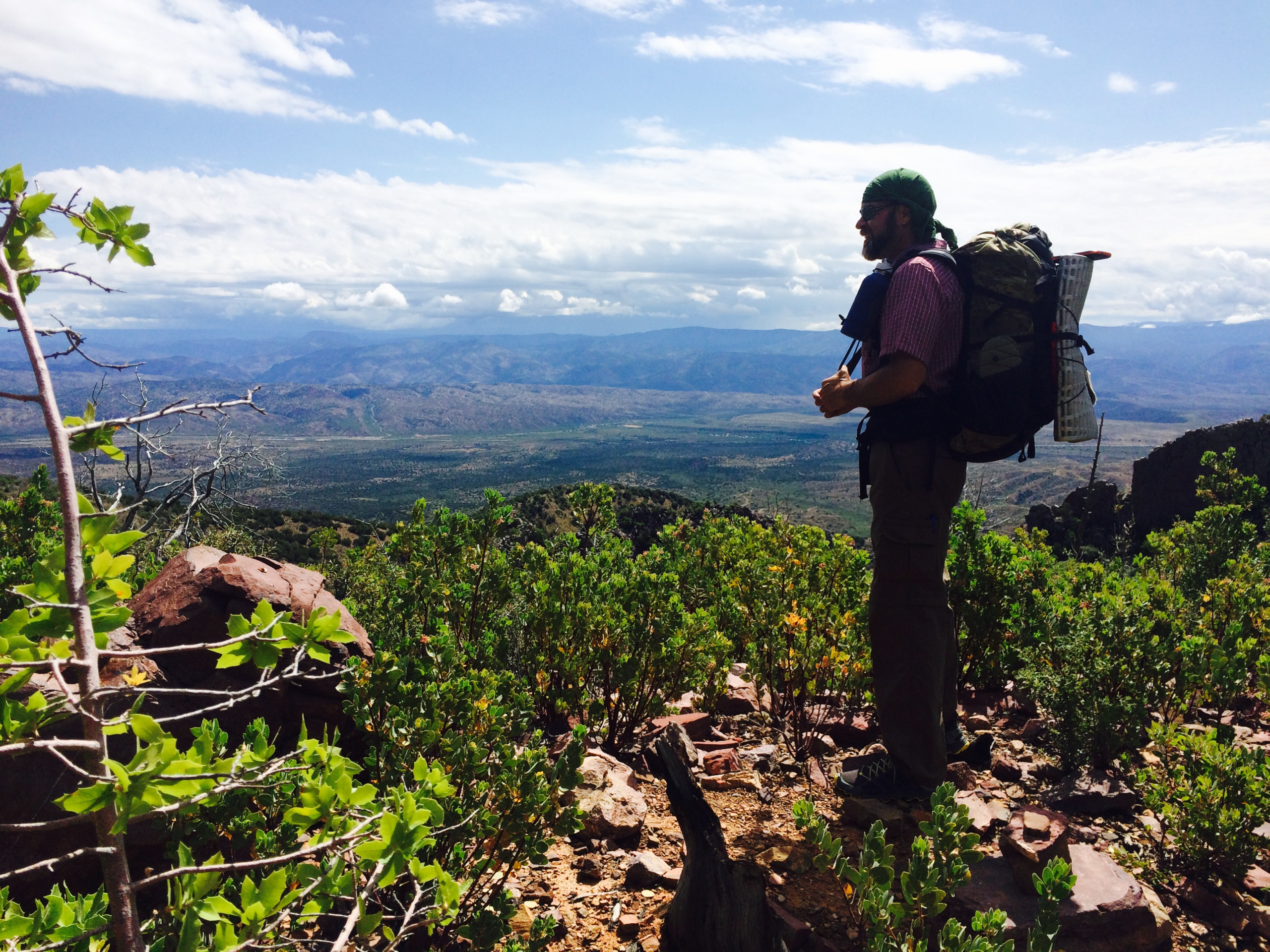
An introduction to the inner life, the wildernesses we journey, and the practices that help us maintain bearing
Every trek has a trailhead—a place to begin, to pause, to study the terrain, check your pack, and decide how you intend to walk. This essay is that trailhead. Before we talk about leadership, culture, suffering, discipline, or the modern conditions that wear down the soul, we need to name the terrain: the wildernesses around us and within us, the Base Camp we carry inside, and the practices that help us maintain bearing when pressure narrows our options.
If you squeeze an orange, orange juice comes out. Pressure reveals the contents.
Human beings are more complicated than citrus. We can present ourselves well. We can speak carefully. We can develop polished habits, professional language, and respectable appearances. We can hide disorder behind activity and call it responsibility. Even so, the principle still holds:
Pressure reveals what governs us.
That is one of the reasons wilderness matters.
When I say wilderness, I do not only mean mountains, deserts, jungles, or trails. I mean any place or condition where pressure reduces options and the inner life begins to show itself. Sometimes wilderness is chosen. Sometimes it finds us. Sometimes it is scenic. More often it looks like fatigue, uncertainty, conflict, disappointment, responsibility, grief, temptation, noise, or the slow pressure of ordinary days.
Wilderness tells the truth. And if we are willing to learn from it, it can teach us something for the next trek.
Greybeard Philosophy begins with a few convictions that have become impossible for me to unsee.
- Wilderness reveals what governs us.
- The base camp is the self.
- And organizations—families, schools, teams, institutions, churches, communities—eventually amplify what we carry into them.
That means culture is never only “out there.” It is always downstream of the inner life. This is why Greybeard Philosophy is not mainly a project about leadership technique, productivity, self-improvement, or inspiration.
It is a project about formation.
- It is about the condition of the inner life.
- It is about what governs us under pressure.
- It is about whether we can remain oriented to true north when life narrows our options.
- It is about whether philosophy can become practice.
And that is where this series is heading. We will begin by asking why so much leadership training, self-help language, and organizational reform disappoints. Not because tools are useless, but because no system can substitute for character. Techniques may improve language for a season, but they cannot build inner discipline for us. Sooner or later, every system drifts toward the character of the people sustaining it.
From there, we will turn inward to Base Camp.
We will explore the first organization—the self. We will talk about attention, habit, fear, desire, conscience, and the health of the inner life. We will ask what feeds the soul, what degrades it, and why inner health determines whether the space between stimulus and response is actually available when we need it.
We will also consult guides, maps, and stars.
No one forms themselves alone. We all inherit guidance. Some of it is sound. Some of it is not. Along the way I’ll keep returning to voices that have helped me stay oriented—Socrates, Epictetus, Marcus Aurelius, the Buddha through Thich Nhat Hanh, Viktor Frankl, Stephen Covey, and others. Not to sound educated, but to stay aligned with principles that hold when conditions change.
Then we will step more fully into wilderness.
We’ll talk about wilderness without and wilderness within. The wilderness that reveals us. The wilderness that finds us. The everyday wilderness that quietly shapes us through repetition. The wildernesses we choose knowingly or unknowingly. And the wildernesses we do not choose at all—those hard miles where the terrain is forced upon us and the question becomes: what remains of freedom now?
And then we will take one more step. Because wilderness is not only a place. It is also a set of conditions. Modern life has its own weather, its own lures, and its own hunger.
We will explore Liquid Modernity—the unstable weather system of a world that will not hold its shape.
We will explore the Attention Economy—the designed landscape of distraction and lures that pulls the mind off its trail.
And we will explore the Validation Treadmill—the hunger for approval, applause, and reassurance that never quite satisfies.
These are not abstract ideas to me. They are conditions we live in. They show up in kitchens, schools, marriages, meetings, commutes, retirements, phones, ambitions, disappointments, and quiet moments of comparison. They press on Base Camp. They shape the space where choice lives. They test whether we can maintain bearing—or whether we drift.
So this series is going somewhere very practical.
- Toward a life in which the inner camp is tended.
- Toward a life in which pressure does not get the last word.
- Toward a life in which small, faithful practices strengthen the power to choose.
- Toward a life in which we can return to our families, communities, and responsibilities with greater steadiness, honesty, and integrity.
Not perfect.
Steadier.
Years ago, while traveling for consulting work, a clerk asked where I was staying. When I told her, she suggested I could save money by staying with her instead, then added with a wink, “No one need to know.” For a brief moment, expediency spoke loudly. Not because the choice was complicated, but because the temptation was simple: treat integrity as negotiable when there appears to be no cost.
Then a line from a poem I had memorized years earlier rose in my mind:
“I have to live with myself and so, I want to be fit for myself to know.”
My answer came quickly:
“But I would know.”
That is the kind of moment this philosophy cares about.
Not the dramatic public speech.
Not the polished image.
Not the appearance of virtue.
The quiet moment.
The unobserved choice.
The pressure point where what governs you internally becomes visible externally.
Greybeard Philosophy is the slow work of becoming the kind of person who can remain truthful there.
The kind of person who can return to Base Camp.
The kind of person who can consult the map.
The kind of person who can maintain bearing.
The kind of person who can take the next step without trading integrity for relief.
That kind of life is not built in grand gestures.
It is built in daily practice.
Internal Practice — The Trailhead
In the next day or two, set aside a few quiet minutes.
Do not try to solve your whole life.
Just begin at the trailhead.
Ask yourself:
What pressure in my life is already revealing something about me?
Where do I most easily drift from what I know is right?
What kind of person do I want to be when pressure narrows my options?
Then write one sentence you can carry into your week:
“When pressure rises, I want to remember…”
Keep that sentence close.
It is your first trail marker.
Outro
In the next episode, we’ll begin at a place many people don’t expect: why leadership training so often fails. Not because training is useless, but because no system can save us from ourselves. We’ll look at what happens when we treat symptoms while ignoring the root.
Thanks for joining me at the trailhead to Greybeard Philosophy. If this essay helped you, stay with the practice—small and faithful is enough. Subscribe at GreybeardPhilosophy.com and learn something for the next trek.
Until next time: be kind to yourself and learn something for the next trek.”