
The Weather That Impacts the Trek
Modern Wilderness Conditions – Part 1
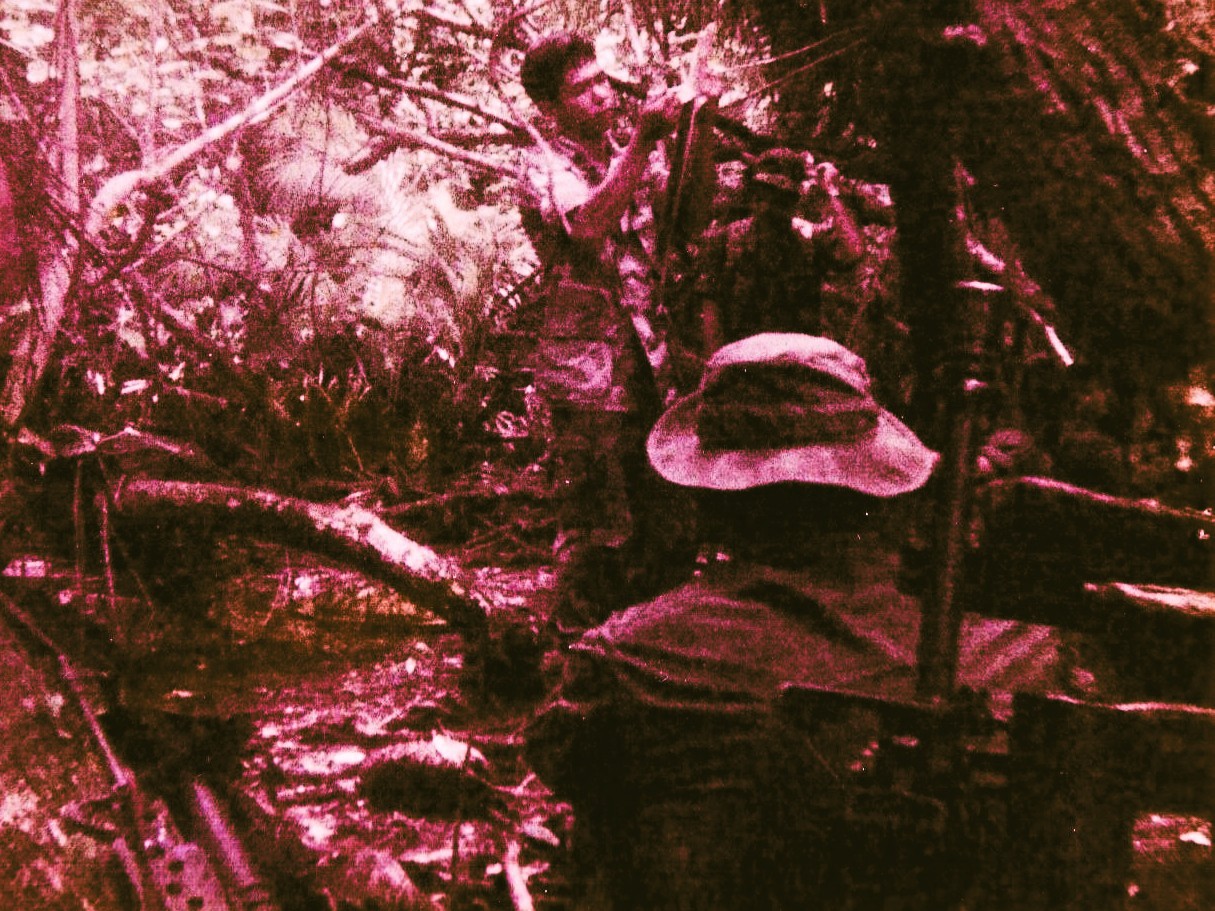
When I was a young 1st Lieutenant with the Special Forces, we traveled to Guam and the Mariana Islands for Jungle Warfare Training – I was excited with anticipation! When we arrived, we discovered that this would be no tropical vacation in paradise. The summer in that region was hotter than I expected, and I quickly learned the jungle is a wilderness within many wildernesses. It teaches through conditions.
One moment the weather can be oppressively hot and humid. The next it drenches you with rain before you can even think about getting under a poncho. Under the triple-layer canopy it can feel gentle and cool—then the trail pushes you into thickets of elephant grass where the humidity turns suffocating. Coming out of the canopy and forcing our way through those thick stands felt like we were miniatures trying to push through uncut Bermuda grass in a summer lawn. We kept our sleeves rolled down to protect our arms from the grass’s serrated blades. I don’t think it ever crossed my mind to quit, but I’m certain I had a chorus of complaints running inside my head – “hey, where’s the bananas and coconuts?!”
As we trudged forward I could faintly hear the sound of rushing water. I dismissed it as wishful thinking because we were deep in the heart of jungle. Then, just as it became nearly impossible to cut our way forward, the giant grass opened up and we stepped into a clearing. There it was: a waterfall. It wasn’t huge—maybe ten feet high—but a waterfall is a waterfall. I felt immediate relief.
I was just about to toss my weapon, drop my rucksack, strip down, and step into that shower when our guide stopped us with a slight hand signal. We backed into the grass, fanned out, went down into a crouch, and began scanning. We stayed there—perfectly still—just inside that suffocating wall of elephant grass for what felt like an hour. The waterfall of relief was only meters away. My legs began to cramp. My back was soaked with sweat under the weight of my ruck. My hands were slick on the stock of my M-16. Salt stung my eyes. And still we held the crouch, scanning the jungle for movement, for any sign of danger.
Finally, our jungle guide calmly stood and faced us.
“Boys,” he said, “if I were hunting you, this is where I’d set up my ambush.”
And with that, he stripped down and took a shower under the waterfall.
Yes—I had my turn too.

But I never forgot the lesson: the changing conditions of the jungle had worn down my attentiveness to the safety of the mission. After cool stretches under canopy, drenching rain, and the grueling push through suffocating elephant grass, my focus on what mattered most diminished. It was lost not to one dramatic mistake, but to the steady pressure of the conditions.
That is what unstable conditions do. They do not always break you in a single moment. They wear you down until the obvious lure feels harmless, even welcoming, and the discipline to pause, scan, and maintain bearing feels unnecessary.
This is what I mean by Liquid Modernity.
Liquid Modernity: cultural weather that won’t hold its shape
Sociologist Zygmunt Bauman used the word liquid to describe modern life because so much of what once felt solid no longer holds its shape. Identity, community, work, institutions, and norms—things previous generations leaned on as stable reference points—now shift, dissolve, and reform faster than we can orient ourselves.
In a liquid world:
- nothing stays fixed for long
- people must continually adapt
- speed replaces stability
- uncertainty becomes normal
That description may sound academic, but you do not need a textbook to recognize it. You can feel it in your body.
You can feel it when policies change midyear.
When job expectations shift without warning.
When social norms invert and you are expected to keep up.
When technology rewires attention faster than wisdom can catch up.
When relationships feel more conditional than committed.
When institutions lose trust and what once felt solid becomes black ice under your feet.
Liquid Modernity is not a place. It is an atmosphere. A weather system. And if you have ever been caught in real weather—on trail or in life—you know what it does. It narrows visibility. It changes footing. It tests whether you actually have an internal compass, or whether you have been borrowing direction from the last gust of wind.
Weather doesn’t ask permission
On the trail, weather is the great disruptor. A blue sky turns black in minutes. Temperature drops. The wind shifts. Visibility collapses. You do not negotiate with it. You do not demand that it be fair. You adapt. But adaptation has two forms:
wise adaptation — adjusting tactics while maintaining bearing
panicked adaptation — changing direction because the pressure is loud
Liquid Modernity pressures us toward the second.
When everything is shifting, the instinct is to grab whatever feels certain: the latest opinion, the safest tribe, the loudest consensus, the quickest relief. That is where people begin to drift. Not because they are evil. Not because they are stupid. But because constant instability wears down the inner life until borrowed direction feels like survival.
This is one reason modern life can feel exhausting even when nothing tragic has happened. The weather itself becomes fatiguing.
You are always recalibrating.
Always updating.
Always scanning.
Always adapting.
And if Base Camp is thin, you begin to live in a chronic state of reactive adjustment.
Three compass-check questions
Liquid Modernity tests orientation. These questions are a compass check:
When the storm rolls in, do your principles stay fixed—or drift with the wind?
When roles or relationships change, does your identity dissolve with them?
When the pace accelerates, does speed become your compass?
Those are not academic questions. They are questions of everyday integrity.
Because in liquid weather, the temptation is not only to change tactics. The temptation is to change what you believe is true—quietly—so you do not feel left behind of left out.
Thich Nhat Hanh: impermanence is real—and that is not bad news
If Liquid Modernity is cultural weather, Buddhist wisdom offers a deep truth about weather: impermanence is real. Thich Nhat Hanh does not present impermanence as a threat. He presents it as a reality we can stop fighting. Much of our suffering comes from demanding that what is unstable become stable. We cling to conditions as though they can guarantee well-being. And because modern life is liquid, we begin to live with a familiar soundtrack:
I will be happy when…
I will be happy if…
I will no longer be unhappy when…
I was happier when…
That way of thinking quietly trains the soul to live downstream of weather. Peace is always postponed. Stability is always somewhere else. Contentment is always one more achievement, purchase, transition, or approval away. But if our happiness is attached to unstable conditions, our happiness becomes unstable too.
This is where Base Camp matters.
In an impermanent world, the question is not, “How do I make everything solid?”
The question is, “What can be stable inside me while everything outside changes?”
Epictetus: do not anchor yourself to moving water
Epictetus offers a hard, clean compass line for liquid times: if you attach your desire and aversion to what is not yours to govern—status, wealth, recognition, the behavior of others, public approval—you will live in chronic misfortune. Liquid Modernity makes this trap more common because the culture encourages us to anchor identity in unstable things:
- status
- career
- approval
- visibility
- relevance
- keeping up
Epictetus would call that fragility of soul. Not as an insult. As a diagnosis. You have placed your anchor in moving water. The Stoic move is not numbness. It is freedom: to relocate the anchor to what is actually yours—your judgments, your character, your choices. In Greybeard terms: when the weather becomes liquid, you do not curse the weather. You strengthen Base Camp.
Marcus Aurelius: fame is weather
Marcus Aurelius returns again and again to a simple truth: applause is fickle. The praiser forgets. The praised is forgotten. Both pass quickly. In liquid times, approval behaves like gusts of wind: it rises, blows hard for a moment, and disappears and often leaves a mess in its path. If you build your shelter out of it, you will live in perpetual exposure. Marcus pushes us back to the ruling part—the inner governor. He warns against being pulled around like a puppet by impulse. That image belongs here.
Liquid weather pulls people.
Crowds pull people.
Trends pull people.
Fear pulls people.
Outrage pulls people.
Marcus’ question is simple:
What is pulling you?
And the more important question is this:
Is Base Camp strong enough to resist being dragged?
When the world is liquid, Base Camp must be solid
This is the center thesis of Liquid Modernity inside the Greybeard framework:
When the world is liquid, Base Camp must be solid.
Because if the outer world flows, dissolves, and constantly reshapes itself, the inner life becomes the only reliable anchor. Without Base Camp formation—clarity, conscience, orientation, inner health—the self is carried by the cultural current instead of walking by principle. And that is the deeper danger of liquid weather: it does not only change external conditions. It changes internal behavior.
People begin to:
speak faster, and less truthfully
react quicker, and less wisely
chase relevance, and lose bearing
trade conscience for comfort
become experts at adaptation and novices at integrity
This is not because they are weak. It is because Base Camp was not tended, and the conditions were constant. Just like the jungle. The water was real. The relief was real. The exhaustion was real. And because those conditions had worn me down, I was ready to step forward without scanning. That is the point: weather does not have to be dramatic to set up an ambush. It only has to be persistent enough to wear down attention and make relief feel urgent.
How to live in liquid weather without becoming rigid
There is one danger here worth naming. Some people hear “Liquid Modernity” and respond by becoming rigid—hard, brittle, reactive. That is not Base Camp strength. That is fear dressed up as principle. Maintaining bearing is not stubbornness. In the wilderness, wise hikers adapt tactics while maintaining direction:
you slow down
you reroute
you make camp
you check your compass
you check your map
you wait out the storm
you protect Base Camp
But you do not pretend the storm is not real. And you do not abandon the compass because visibility is low. Liquid Modernity requires the same posture:
adapt without losing yourself
stay responsive without becoming shapeless
remain humble without becoming malleable
practice impermanence without surrendering virtue
That is why the guides matter. They teach you how to live in changing conditions without letting changing conditions become your god.
Internal Practice — The Weather Report and Bearing
Focus: When the weather shifts, maintain bearing.
Step 0: Enter Base Camp (2 minutes)
Slow inhale, slow exhale to return to Base Camp.
Relax brow, jaw, shoulders, and hands.
Silently say:
In-breath — “Steady”
Out-breath — “Maintain bearing… 1”
In-breath — “Steady”
Out-breath — “Maintain bearing… 2”
In-breath — “Steady”
Out-breath — “Maintain bearing… 3”
Continue to 10…
Read this post or listen to the podcast with one question
What “liquid weather” is pressing on my life right now?
Reflection (choose one)
- What around me feels unstable, shifting, or hard to stand on?
- When conditions change quickly, what happens in me first—urgency, fear, reactivity, people-pleasing, numbness?
- What principle feels most pressured to bend right now?
One small action this week (pick one)
- Slow down one decision until it matches the speed of integrity.
- Write one brief and fundamental principle on a card and carry it with you.
- When the pressure rises, take 3 breaths before responding and ask: “What is true north here?”
- Reduce one input that keeps you in reactive adaptation mode.
Trail marker (one sentence)
“In this liquid weather, I will maintain bearing by __________________________________.”
Bridge to the next condition
In unstable weather, the mind looks for handholds. It reaches for certainty, stimulation, and relief. That is where the next condition enters—not as climate, but as craft. In the next post, we will explore the Attention Economy as a wilderness of lures and mosquitoes—not only the buzzing distractions that erode presence, but the designed traps that capture desire and pull attention off its trail.
Thanks for reading Greybeard Philosophy. If this helped you, stay with the practice—small and faithful is enough. Until next time: be kind to yourself and learn something for the next trek.