
Wilderness Reveals
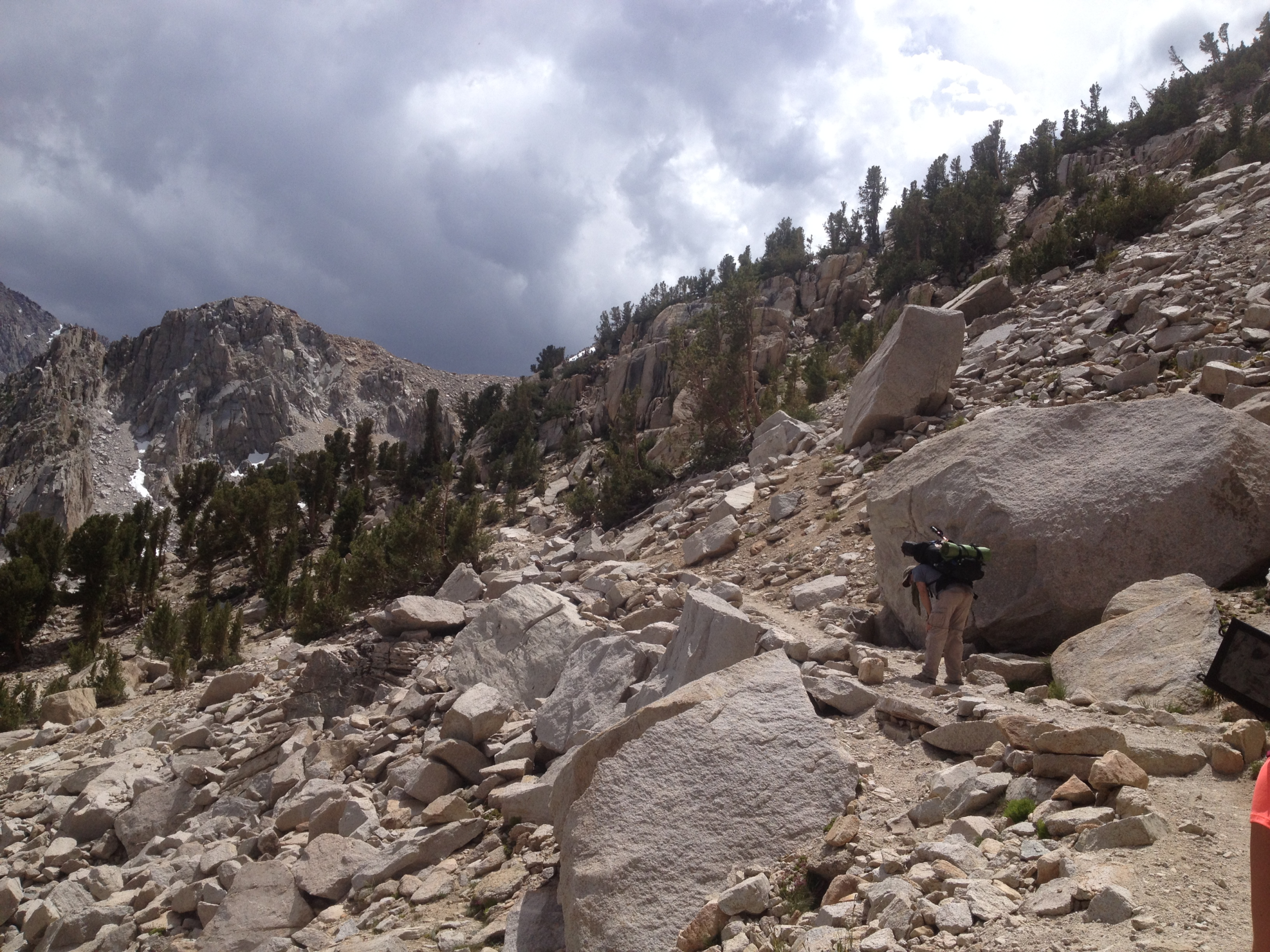
In 2014, I stepped into the High Sierras with my son Danny and his wife Melanie thinking I was prepared.
I wasn’t.
I had the wrong food. The wrong shelter. The wrong pack. I hadn’t trained the way I should have, and I didn’t respect—or even understand—altitude the way an experienced backpacker would. Somewhere along that long stretch toward Mount Whitney, the mountain did what mountains do: it took my assumptions and made them costly.
The trail was beautiful—so beautiful it almost felt unreal. Granite ridgelines. High, clean air. Crystal clear glacial lakes. The kind of blue sky and sunlight that makes ordinary thinking feel small. But beauty does not remove difficulty. It sits beside it. And the longer we walked, the more the wilderness began to reveal what I had brought with me that wasn’t in my pack.
Fatigue has a way of stripping away external bravado. So does thin air. So does the slow, steady pressure of miles.
I remember pushing up toward Forester Pass, exhausted in a way that wasn’t dramatic—just real. Finally, at the pass, I sat down—not to “take in the view,” but because my body simply insisted. I lowered my head, removed my boots and socks, and listened to my pounding heart and labored breathing. I noticed the inner chatter that begins when life gets hard:
What’s wrong with me? I’m so embarrassed. I wonder what they’re thinking. How am I going to get through this? How am I going to keep up?
Then I opened my eyes and looked at my bare feet.

Growing out of rock—out of what looked like the most unlikely place for tenderness—was a small cluster of flowers. Sky Pilots. Purple. Quiet. Unbothered. As if the world had room for both hardship and grace without needing to justify either.
Epictetus said it bluntly:
“People are not disturbed by things themselves, but by the view they take of those things. When you are feeling upset, angry, or sad, don’t blame another for your state of mind. Your condition is a result of your own opinions and interpretations.”
That day, the mountain wasn’t only testing my legs—it was exposing the stories I was telling myself while I sat there.
I smiled at those flowers, and something in me settled.
Not because the climb became easier. It didn’t.
Not because the sickness vanished. It didn’t.
But because I saw, clearly, a choice.
I could keep walking while feeding self-pity, comparisons, and complaint… or I could choose to keep walking without them. The wilderness hadn’t created that choice. It revealed it—like pressure revealing what’s inside.
I resolved then: I would drive on with quiet confidence—and learn something for the next trek.
Later, at Guitar Lake—the base camp many use before the final climb up Whitney—the altitude sickness worsened. I was nauseous and lightheaded. I had a searing headache and couldn’t eat or sleep. That kind of sickness has its own voice. It tempts you toward self-pity, irritability, and grievance. It makes everything feel personal. (Side note: I’m thankful for a strong son who volunteered to carry my food the rest of the way. We laughed later because in my illness I forgot to dump out the previous night’s hydrated food—so he carried that heavy bag all the way up to Mount Whitney.)
And again, there was a choice.
Not a heroic one. Not a public one.
A private one, inside the first organization: the self.
I made the same vow. No complaint. Drive on. Stay steady.
We eventually climbed and summited Mount Whitney. But the summit isn’t my main memory. I remember Sky Pilots.

Because the true lesson wasn’t about reaching a peak. It was about what the wilderness exposed in me—what it always exposes when comfort is removed: my default inner posture, my habits under pressure, and the condition of the inner life that I carry into every mile of responsibility.
What Wilderness Actually Does
When I say “wilderness,” I don’t only mean backpacking, bouldering, climbing, or remote places on a map.
I mean this:
Wilderness is any environment where pressure reduces your options and reveals your default self.
That can happen on a mountain.
It can also happen in a kitchen at 6:30 p.m. with tired children.
In a difficult marriage conversation.
In a hospital waiting room.
In conflict at work.
In financial strain.
In grief.
In loneliness.
In leadership.
Some wildernesses are scenic. Many are not.
But they share a common feature: they strip away the unnecessary, and they reveal what governs us when we can’t rely on comfort, control, or appearance.
And this is the key point:
Wilderness doesn’t create character. It reveals it.
That’s why wilderness matters for leadership, and for life. Because organizations—families, schools, teams, institutions—are not corrected by our intentions. They are shaped by what is inside us. What the wilderness reveals, organizations later amplify.
Trail marker: If you only read one thing today, don’t miss the practice at the end.
The First Organization Under Pressure
In earlier posts we’ve returned to a simple, demanding premise:
The first organization is the self.
Before we lead anything outwardly, we are already being led inwardly—by belief, fear, desire, habit, attachment, resentment, discipline, or conscience.
When pressure arrives, we don’t suddenly become someone new. We become more clearly who we already are.
If the inner life is neglected, pressure exposes it.
If the inner life is tended, pressure exposes that too.
This is why inner health matters. Not as a private virtue, but as a practical power. Because when you are exhausted—when your choices are narrowed—when your emotions surge—inner health gives you the capacity to remain human, to remain oriented, and to choose well.
Not perfectly.
But deliberately.
Your Own Wilderness
You don’t need a mountain to learn this.
Most people are already walking through wilderness. They just don’t call it that. They call it stress, conflict, anxiety, workload, parenting, illness, uncertainty, or “a hard time.”
But naming it matters, because naming it changes how you interpret it.
A wilderness is not only a hardship to endure.
It is also a place where the truth about your inner life becomes visible—if you are willing to see it.
You can often see your inner health by your responses to outer pressure. Your personal wilderness provides that pressure.
And once you can see it—once you name it—you can begin to tend it.
Internal Practice — Mapping Your Wilderness (Without and Within)
Before you reflect, begin with one simple breathing practice. Thich Nhat Hanh writes: “Breathing in, I calm myself. Breathing out, I smile.” Take three slow breaths. On the in-breath, silently say “calm”. On the out-breath, silently say “smile”. Don’t force either word—just let it steady you.
Set aside ten quiet minutes. No special language is required. No journaling is required—though writing may help.
The wilderness outside is easier to name. The wilderness within is often unmapped—unknown until pressure brings it into view. This practice is meant to help you notice both.
1) Name the Wilderness Without
Where does pressure reliably reduce your options?
- a certain relationship
- a time of day (mornings, evenings, transitions)
- a recurring responsibility
- fatigue, hunger, overload
- conflict, uncertainty, or lack of control
- a season you didn’t choose
Name one. Keep it concrete.
2) Notice What It Reveals in You
When you are in that wilderness, what rises up first?
Not what you think you should feel—what actually shows up.
- complaint
- control
- comparison
- withdrawal
- sarcasm
- self-pity
- people-pleasing
- numbness
- blame
- frantic productivity
- half-truths or embellishments
- irritability
Don’t moralize it. Just notice it.
3) Identify the Wilderness Within (Unmapped Terrain)
Now turn inward gently.
Ask:
- What surprised me about myself when pressure arrived?
- What part of me became visible that I didn’t know I carried?
- What emotion showed up faster or stronger than I expected?
- What thought pattern took over before I could choose?
This is not a confession. It is a map-making exercise.
Sometimes wilderness within isn’t what we avoid.
It’s what remains unexplored until life opens the trail.
4) Ask One Orienting Question
In that moment, what did I most want?
- relief?
- control?
- approval?
- certainty?
- escape?
- to be seen as competent?
- to be right?
Often the wilderness within is discovered by what we reach for.
5) Choose One Small Act of Tending
Not a program. Not a reinvention. One act.
For the next seven days, when you enter that outer wilderness, try this:
Pause. Breathe once. Name what is being revealed in you. Then choose one response you can respect afterward.
Even if it’s small. Especially if it’s small.
Because the first organization – the first camp – is built—or neglected—in moments like that.