
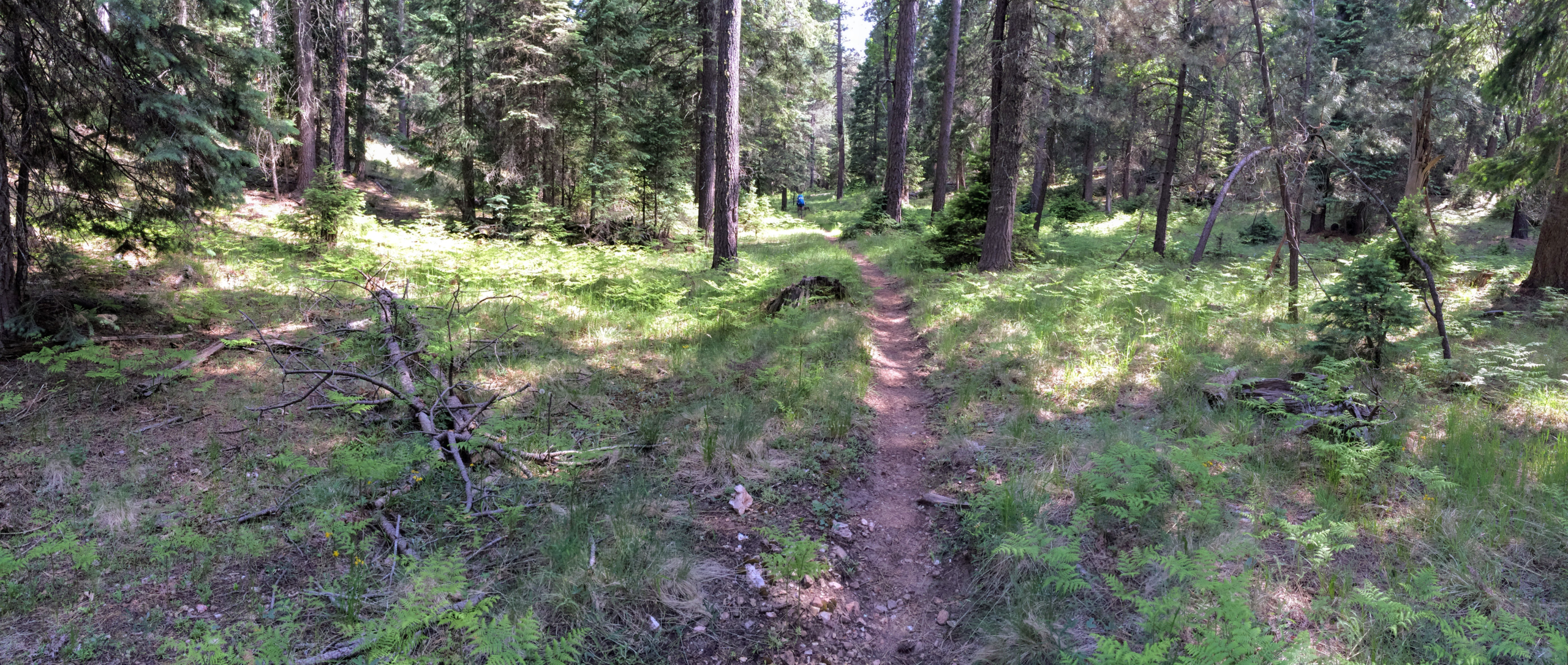
(Part I: Wilderness Without and Within — Where Pressure Reveals What Governs Us)
Read to the end for the weekly practice.
Most people think “wilderness” is something you choose.
A backpacking trip. A long hike. A trailhead you drive to on purpose.
But a lot of the wilderness that forms us isn’t chosen at all. It arrives. It finds us.
A diagnosis. A divorce. A season of anxiety. A child who is struggling. A job that changes. A relationship that cracks. A financial hit. A move you didn’t want. A loss you didn’t see coming. A responsibility that lands in your lap when you’re already tired. Or, what Thoreau called ‘quiet desperation’.
You didn’t plan it.
You didn’t train for it.
You didn’t pack well.
And yet—you’re in it.
Wilderness That Finds You
In my work, I’ve seen wilderness show up on a Tuesday afternoon with no warning—when a situation suddenly turns, emotions run hot, and everyone looks to you as if you’re supposed to have a clean answer ready. I’ve also watched it show up at home, when you’re depleted and the people you love need more from you than you have in the moment.
In those moments, something becomes clear: pressure reduces options. And when options narrow, the inner life becomes visible.
But the most dangerous wilderness isn’t always the sudden event. The deadliest wilderness is often the grinding pressure of time—the slow, repetitive strain that wears down the inner camp day after day.
Sometimes the wilderness doesn’t sneak up on you. Sometimes it’s waiting for you at the gate.
For most of my campus leadership career, I’ve opened the gate early in the morning to greet arriving students. It’s a joy and a privilege I’ve done for many years. Even so, sometimes that gate has been my wilderness.
It’s 6:45 a.m.—dark, cold, and quiet. I’m alone, waiting for students to arrive. And deep in the inner camp—beneath the surface where I keep my voice calm and my face steady—I’m already running the day’s possibilities:
- Which teacher will call out sick?
- Which parent will stomp to the gate and demand I do something about her child’s teacher… or a student who is “being mean”?
- Which bus will be late?
- Will the teacher on duty actually show up at 7:30 to relieve me so I can get to my early meeting on time—another meeting with a different parent who’s already angry?
Standing there, I could feel something happening inside me. I was still smiling. Still greeting students. Still doing my job. But beneath the surface, I felt myself growing more resentful… more bitter… more tired of the whole thing.
You see, it’s not always one dramatic wilderness event – no thunderstorm, no sudden crisis – that gets you. My wife and I have been in plenty of those. Once, backpacking on the Mogollon Rim in Arizona, we were hit by a sudden rainstorm with lightning and thunder flash-banging over our heads. It terrified us. We hurried, set up our tent, crawled in soaking wet – along with our dog Carleigh – and waited it out.

That kind of wilderness is an adventure. It becomes a story. It becomes a social media post. It collects a few likes and comments.
But the slow wilderness is different.
My son Danny, in his 2017 book Crunch: A million snowy steps along the Pacific Crest Trail, tells of his stretch through Oregon. He described it as the “green tunnel”—monotonous, boring, mosquito-infested, never-ending… soul-sucking.
That’s the wilderness most people don’t post.
My wilderness as an educational leader wasn’t always the traumatic events—lockdowns, sudden monsoon floods running through the property, or even the day a parent tried to run me over with her car in the parking lot.
Those moments were intense, but they were rare.
My wilderness was the green tunnel—the never-ending quiet pressure where you keep a daily smile on, do what needs to be done, and keep trekking. It was the life of steady responsibility that can slowly turn into quiet desperation if you don’t tend the inner camp.
What surprised me early in leadership—and still humbles me now—is that wilderness doesn’t only reveal competence.
It reveals governance: what is actually running the first camp.
- Am I led by fear—or by principle?
- Do I reach for control—or for clarity?
- Do I move toward people with patience—or away from them with irritation?
- Do I tell the truth—or manage appearances?
- Do I become steady—or do I become loud?
Some wilderness is scenic. Some is fluorescent-lit and full of emails.
But it does the same work.
Two Ways We Enter Wilderness
Sometimes wilderness arrives without our permission: illness, loss, conflict, uncertainty, a responsibility we did not ask for.
Other times we walk into wilderness one step at a time. Not because we set out to suffer, but because repeated choices create a path: small compromises, avoided conversations, unmanaged appetites, unexamined resentments, a neglected inner life—drift.
And that kind of wilderness can feel especially disorienting, because it comes with a quiet realization:
I helped create the conditions I’m now walking through.
I’m not saying this to assign blame. I’m saying it because it restores dignity: if choices can lead us into wilderness, choices can also lead us out—one step at a time.
In both cases, the wilderness does the same work: it reveals what governs us.
What the Wilderness Reveals (Without and Within)
The wilderness without is the situation: the pressure, the stakes, the limitation, the fatigue.
The wilderness within is what gets exposed in you under that pressure—often something you didn’t even know was there. Not always avoidance. Sometimes undiscovered territory.
You thought you were fine… until you weren’t.
You thought you were patient… until you were tired.
You thought you were secure… until you were threatened.
You thought you were humble… until you were ignored.
This is why wilderness matters, even if you never step onto a trail.
Because the wilderness is not only a place.
It is a condition—where pressure makes the inner life show itself.
Companion on the Trail: Marcus Aurelius
When I need a steady mind, I often picture Marcus Aurelius—not as a statue, but as a tired man writing to himself at night, trying to live with clarity inside an empire he couldn’t fully control. I can hear him say something like Make the divinity within you your guardian. Be a good man.
His posture is not dramatic. It’s faithful.
Meet what arrives.
Don’t add unnecessary suffering.
Do the next right thing.
Keep your integrity intact.
That’s not “Stoicism” as a vibe. That’s survival for the soul.
Internal Practice — Making Camp When Wilderness Finds You
Set aside ten quiet minutes.
1) Name the wilderness you’re in
Choose one current situation that pressures you.
Write one sentence:
“The wilderness I’m walking through is…”
2) Name how you entered it
Ask honestly—without drama:
Did this wilderness find me?
Or did my repeated choices lead me here—little by little?
(We’ll later name the force behind repeated choices as “habit energy.” For now, just notice the path.)
3) Notice what it reveals in you
Under that pressure, what rises first?
- control
- complaint
- comparison
- self-pity
- avoidance
- anger
- numbness
- people-pleasing
- dishonesty (even small)
- frantic productivity
Be honest, but not cruel.
4) Find the unmapped interior
Ask this gently:
What surprised me about myself here?
What part of me became visible that I didn’t know I carried?
What emotion shows up before I can choose?
This is not self-accusation. It’s map-making.
5) Make camp (a 30-second reorientation)
Take three slow breaths.
On the in-breath, silently say: calm
On the out-breath, silently say: steady
Then ask one question:
“What would a principled response look like here—small, quiet, and real?”
Choose one next action you can respect afterward.
6) Learn something for the next trek
Write one sentence:
“Next time pressure finds me, I want to remember…”
That sentence becomes your trail marker.
Because wilderness is a teacher – without and within – if we’re willing to learn.
In the next post, we’ll go closer to home: the everyday wilderness that doesn’t feel dramatic but quietly forms (or deforms) us through repetition.