
Why Every System Begins Before It Is Seen
Welcome to Greybeard Philosophy—bringing ancient wisdom and daily practice to the inner life and the wildernesses we journey, one practice at a time. I’m Dr. Brian Winsor. In this essay, I want to make a claim that sounds simple but changes everything: the base camp is the self. Before we belong to any organization, we belong to our own inner life—and whatever governs us there will eventually show up in our choices, our relationships, and the systems we build. This essay is called,
The Base Camp Is the Self: Why Every System Begins Before It Is Seen
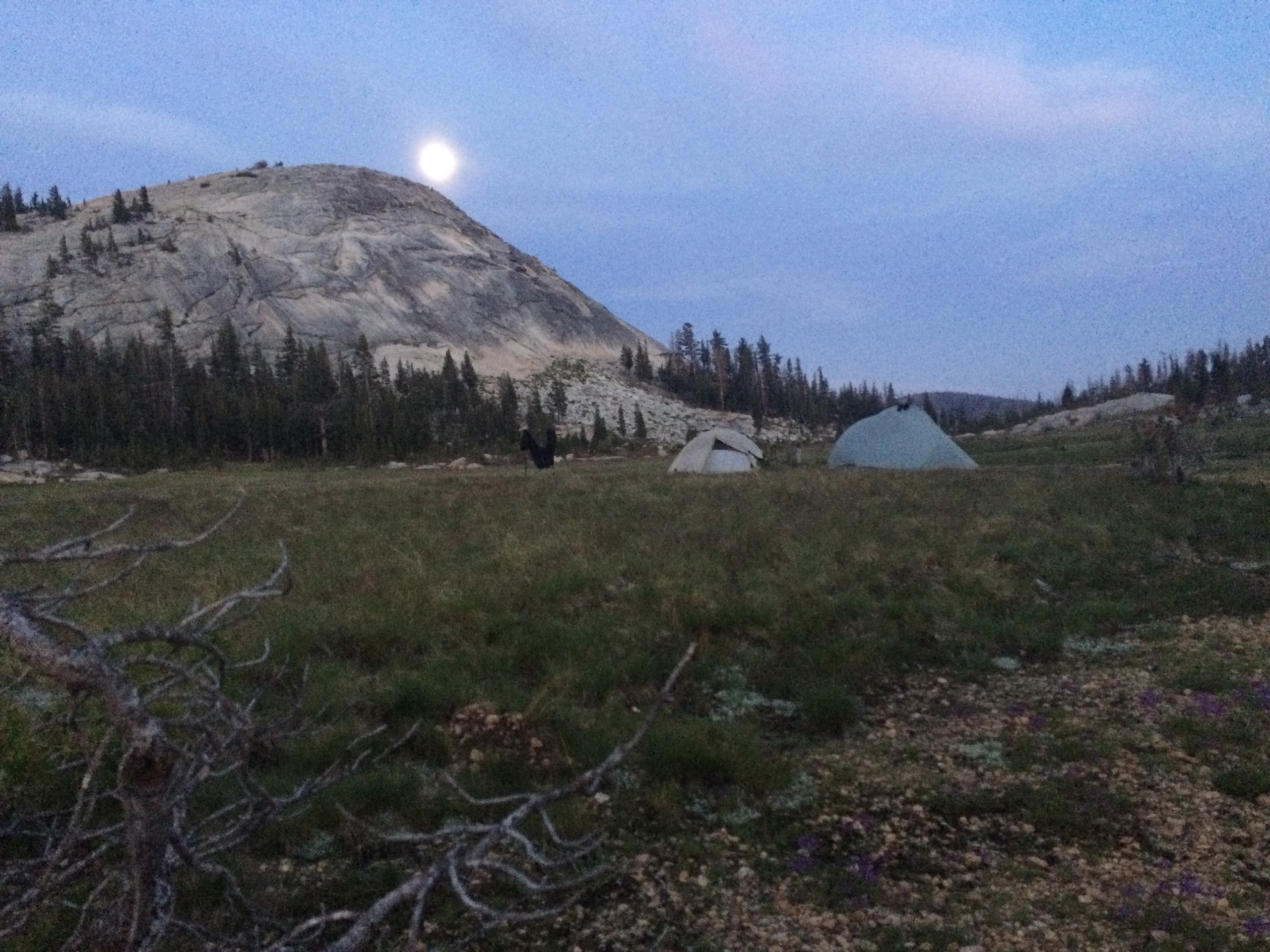
I call it Base Camp because it’s where we return to recover, reorient, and remember what is true before we take the next step. Wilderness is the stimulus. Base Camp is the space. The response is the choice—and our life becomes the accumulation of those choices.
Before we ever belong to a family, a school, a workplace, or a nation, we belong to ourselves.
That may sound obvious.
It isn’t.
Most of us live as though the opposite were true—as though our inner life is a private afterthought, while “real” responsibility begins only when others are involved. We speak carefully about organizational culture while ignoring the culture we are cultivating within.
But every system we inhabit is shaped—quietly, relentlessly—by the inner condition of the people who sustain it.
The first organization is Base Camp – the self.
The True Nature of the Self
Epictetus asked a deceptively simple question: What is the nature of a human being?
His answer was not about happiness, success, power, influence, or possessions. It was about fidelity to virtue—the ability to remain aligned with what one knows to be right, regardless of circumstance.
Socrates went even further. He argued that virtue is not a set of external behaviors, but the health and well-being of the soul. Vice, by contrast, is a kind of inner disease—deformity, weakness, and disorder. A person lives well, Socrates insisted, only when the inner self is well ordered.
In this view, virtue is not performance.
It is condition.
The condition of the inner self is not revealed when life is calm.
It is revealed under pressure and more acutely while suffering.
Who we become under pressure is not accidental—it is diagnostic. It shows us the true state of the inner life we have been cultivating all along.
Inner Condition Becomes Structure
Before strategic initiatives are launched, before policies are written, before roles are assigned or expectations clarified, something more basic is already at work: the collective inner condition of those with responsibility.
It shows up in:
- how desire and craving are managed,
- how fear, despair, and uncertainty are handled,
- how anger is expressed or suppressed,
- how quickly rationalizations appear,
- how often avoidance replaces responsibility.
These are not private matters.
They are structural.
An undisciplined inner life does not remain contained.
It externalizes—into decisions, norms, silences, and systems.
The Inner Self and the Freedom to Choose
Viktor Frankl, writing from the most extreme conditions imaginable, named a truth modern life often forgets:
Everything can be taken from a person but one thing: the last of the human freedoms —to choose one’s attitude in any given set of circumstances, to choose one’s own way. And, there were always choices to make.
Frankl was not speaking optimistically.
He was speaking precisely.
Between what happens to us and what we do about it, there is a space. That space may be very small. Often it is ignored. Some are unaware it exists at all. But it exists—and in that space, responsibility begins.
What is often missed is this:
The health of the inner self determines what happens in that space.
A disordered inner life produces a narrow, unstable space.
A cultivated inner life makes the space accessible, durable, and usable.
When people deny that space, they say things like:
- “I had no choice—he made me angry.”
- “That’s just how it is around here.”
- “I was just following the system.”
- “Everyone does it.”
- “It’s not my fault.”
These statements describe pressure—but they deny “the last of the human freedoms”, to choose our response.
And every time we deny that freedom to choose, we quietly diminish our own humanity. Systems do not create these responses. They merely reward or punish what is already there.
The Space Where Discipline Lives
Stephen Covey gave modern language to what Stoicism and Buddhism have long taught:
Between stimulus and response there is a space. In that space lies our power to choose our response; in these choices lie our growth and our freedom.
What is often misunderstood is that this space does not stay open by accident.
It must be cultivated.
Practices like mindfulness—and what Buddhism calls shamatha—aren’t escapes from responsibility. They are training for it, so the space doesn’t collapse when pressure rises.
We must practice living in the space—learning to remain present with sensory impressions, emotional surges, cultural expectations, and the habitual voices that rise from long-stored patterns of thought.
Without discipline, the space collapses.
When reactive energy is triggered, we become overstimulated, reactive, and inefficient—but not thoughtful. We respond with emotion rather than judgment, then justify our response and sometimes even boast about it.
This is why inner calm is not a personality trait.
It is a moral skill.
Without this practice, habit energy takes over. Old patterns reassert themselves. And the inner disorder quietly becomes public structure.
Systems Reveal the Inner Life
We like to believe that private habits are separate from public roles. They are not.
What we tolerate or value within ourselves—honesty or evasion, patience or reactivity, focus or distraction—eventually surfaces in the systems we touch. Not because we intend it to, but because repetition becomes structure.
Your calendar reveals what matters.
Your silence teaches what is acceptable.
Your reactions teach others how safe truth is.
Your private conversations teach how trustworthy you are in public ones.
This is as true in families as it is in institutions.
The self is not a private refuge from responsibility.
It is the first site of stewardship.
An Internal Practice: Living in the Space
Over the next few days, notice moments when you feel activated—
irritated, defensive, rushed, offended, or compelled to respond quickly.
When the stimulus appears, pause.
Do not analyze it.
Do not justify your response.
Simply notice whether a space exists between what happens and what you do.
Then ask yourself, quietly:
- How comfortable am I in this space?
- Do I rush to close it, or can I remain present?
- What habit energy is pulling me toward a familiar response?
If the space feels uncomfortable, that is not failure.
It is information.
Finally, sit with this question—not to answer immediately, but to let it work on you:
Would I value cultivating a healthier inner life—one capable of sustaining this space under pressure?
That question is not about technique.
It is about the condition of the self.
And that condition is where all real leadership begins.
In the next post, we’ll explore the condition of Base Camp—what strengthens it, what erodes it, and why inner health determines whether that space is accessible when you need it most.
Thanks for reading Greybeard Philosophy. If this essay helped you, stay with the practice—small and faithful is enough. Until next time, be kind to yourself and learn something for the next trek.

Comments
3 responses
Bryan, I generally agree with the ideas you are discussing in this piece. I am familiar with Victor Frankel’s statement, and Stephen Covey’s statement, and agree with them.
The idea that our most fundamental freedom is our freedom to choose our mental and emotional reaction to a situation seems logical. It seems related to the idea that Neal Maxwell and others have taught, which is that the only thing we can give God is our will, our willingness to adopt His point of view and live accordingly.
I like the exercise of trying to remain aware of one’s reaction to life’s situations, And to try to expand the space for a logical and thoughtful and principled response to those situations.
One thought: there is a lot of language that is used, a lot of terminology, around philosophical and religious and behavioral ideas. I guess that’s a necessary shorthand to discussing those ideas efficiently, but it can also blur what we’re really talking about.
For example, In the last couple of years I have started doing guided meditation. Which I find helpful. But the practitioners of guided meditation use a lot of terminology that I’m not familiar with and Which are linked to a worldview or a view about how physical objects respond in the real world that I don’t necessarily believe in.
For example, the idea of chakras and energy residing in those spaces. I’m not Sure at all what this energy is and how it behaves, but I’m quite skeptical of the idea that these non-measurable and non-observable structures exist in the human body and behave as described.
So this language is a barrier to me when I do guided meditation because when I hear the word chakra it immediately introduces a skepticism where there needs to be belief in the process.
Not all terminology is a problem because I am skeptical about the actual mechanisms, some of it is just strange or undefined. So when you use a term like “habit energy”, I don’t know what that is. I can guess at what I think it might be, but if I’m wrong, then we’re not communicating.
I think an important question for you is: what value are you adding to these well established principles of wisdom? One way I think you could add value is by being very clear about the definitions of the terms you use. If you could explain clearly to the reader, what something like habit energy is, and how it fits into a world view that you hold and find valuable, that would increase understanding and clarity, and allow people to understand whether they really agree with you and what they should do about it.
Thank you so very much, Doug!
Yes, volition, will, the nature of man, is a central part of my philosophy. The gift of agency is to all… we can squander or build upon the gift. Epictetus and the other Stoic writings support the writings of Elder Maxwell and the LDS doctrine. The only path to true freedom is surrendering will/volition/agency is to the gods. It was given to us by God and would never be taken away from us by God. At this point of my development, I’m less confident of the worlds translation (or of Epictetus’ translation) of “God” and therefore the idea of the new-age God that both sides of the political aisle and the 1000s of businesses marketing “God” rely on is not for me. I’m seeking to rub away the religious layers created by well-intentioned humans to find my own peace with God. I’m very thankful for the foundation of my life built upon the doctrine of my LDS heritage. Even so, there are many layers that I’m rubbing down through to find my personal relationship with God.
Chakras… not for me. The guide I found for meditation is Thich Naht Hahn. I feel a kindred spirit with him. He wrote many many books on Buddhism the most significant for me is “The Heart of the Buddha’s Teachings”. In this he also acknowledges the layers and layers of “doctrine” placed on the Buddhist tradition. This book goes right to the original teachings (as much as a man can do centuries later) of the Buddha.
Thank you, again so very much for this feedback.
Terminology… yes, thank you. I will add this to my editors feedback. I wondered about that as well. In preparation for the book, my editor suggests that I keep the writings very short and digestible. My mistake is assuming a common understanding. This is good feedback and I’ll keep in mind as I write the next blog.
Good question… What value am I adding? That is the principle question I keep at the forefront of my mind as I research, study, write. The value I am aiming for is to bring the ancient wisdom to into the lives of anyone seeking peace. The challenge I wrestle with is the dissertation was written for an academic audience and specifically for organizational leadership. My intention is to bring this to the level of the individual.
Thank you, Doug. I appreciate another analytical mind poking at me!
Brian
Oh, one more thought… I highly value all of the “thoughtful skeptics” in my life. Thank you