
If you squeeze an orange, orange juice comes out. Pressure reveals the contents.
In humans, we are far more complex — capable of masking what is happening inside with a practiced outer appearance. And still, the principle holds: pressure reveals what governs us.
This is one reason wilderness matters.
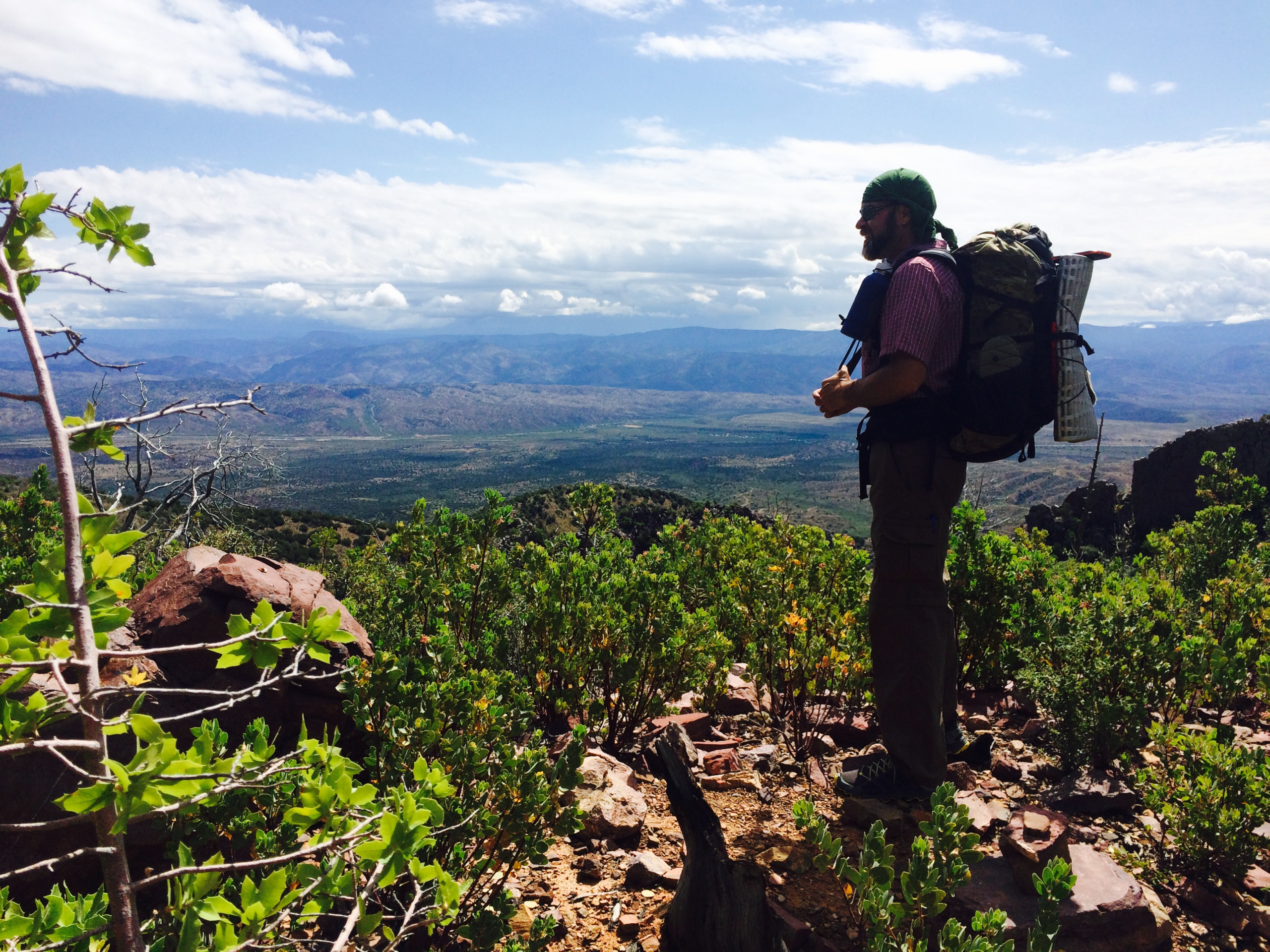
Wilderness — whether the trail you choose or the season that finds you — strips away the convenient performance. It reduces options. It exposes. It tells the truth. And if we pay attention, it teaches us something for the next trek.
Wilderness reveals who we are.
Organizations amplify what we carry into them.
Greybeard Philosophy begins with two truths that have become impossible for me to unsee:
Wilderness reveals who we are.
Organizations amplify—or erode—what we carry into them.
Wilderness is where pretense dies. Whether it’s a trail you choose or a season that finds you, pressure reduces options and the inner life shows itself.
Organizations do something different. They scale what is already there. Families, schools, teams, institutions—any human system—will eventually amplify what they reward and tolerate, and erode what they neglect and excuse. That is why culture is never merely “out there.” It is always downstream of the inner life.
This is not primarily a project about leadership technique. It’s a project about formation.
In the posts ahead, we’ll walk a coherent path:
- Wilderness Without and Within — the pressures that reveal what governs us.
- Base Camp — the inner place we return to so the space of choice stays open.
- The Narrow Pass — the moments when pressure tempts us to violate principle.
- The Return — how our inner condition becomes public reality through what we build together.
And along the way, we’ll keep consulting guides and maps—voices like Socrates, Epictetus, Marcus Aurelius, The Buddha through Thich Nhat Hanh, and Frankl—not to sound educated, but to stay oriented to true north when the weather turns.
True North and the Internal Witness
Every life has a north star — a set of principles we claim to believe in. But principles only matter when they hold under pressure. The defining moments are rarely dramatic. They are usually quiet, private, and unobserved — except by the one witness who is always present: the self.
Years ago, while traveling for consulting work, a clerk asked where I was staying. When I told her, she suggested I could save money by staying with her, and with a wink said, “no one need to know.”
For a brief moment, the voice of expediency was loud — not because the choice was complicated, but because the temptation was to treat integrity as negotiable when there was “no risk.”
Then a line from a poem I had memorized on a 3×5 card years earlier rose up in my mind:
“I have to live with myself and so, I want to be fit for myself to know.”
The response came quickly and simply: “But I would know.”
That is what moral muscle memory sounds like. Not a debate. Not an image-management calculation. A settled refusal.
Greybeard Philosophy is the slow work of building that kind of steadiness — so that when the narrow pass comes, you can stay true.
Internal Practice: The Quiet Witness
In the next day or two, find one small moment to be still — a few minutes is enough.
Ask yourself:
- What kind of person am I becoming when no one is watching?
- Where do I rationalize small compromises?
- What principle do I most want to be true of me under pressure?
Write one sentence you can carry into your week:
“When the moment of choice comes, I want to remember…”
Keep that sentence close. It is a trail marker.
In the next episode, we’ll talk about why leadership training so often fails—not because training is useless, but because technique can’t substitute for character. We’ll look at what happens when we treat symptoms while ignoring the root.”
Thanks for reading Greybeard Philosophy. If this essay helped you, stay with the practice—small and faithful is enough. You can find the written version along of this podcast at GreybeardPhilosophy.com. Until next time: by kind to yourself and learn something for the next trek.